Get Your Decision Readiness Assessment Today!
See where your organization's Strategic Agility stands: just 13 questions in 10 minutes.
When Survival Mode Becomes the Strategy
From Survival to Strategy - An AdvisureIQ Success Story | Chapter 1
David Van Horn, CPA
5/8/20262 min read

When Capable Leadership Isn't Enough
Many struggling businesses reach a point where management stops operating strategically and starts operating transactionally.
The leadership is capable. They are working constantly, solving problems all day, and making decisions every hour. And yet they are fighting to keep the business moving. They are struggling to survive.
When a business spends enough time in survival mode, its structure disappears. Planning disappears first. Then reporting. Then accountability. Eventually, the business operates almost entirely on instinct and memory.
We recently started working with a small business that has reached this point. Like many long-standing owner-operated companies, the business has endured years of disruption: relocation costs, market shifts, changing customer behavior, supplier pressure, labor reductions, and operational strain that compounded over time.
None of the problems happened at once. Businesses typically end up in trouble after years of accumulated friction, and not from a single catastrophic event.
Over time, survival mode replaces the operating model.
The business has retained its customers. Products are still moving. Employees are working hard. But the operational infrastructure required to manage the business has almost eroded completely.
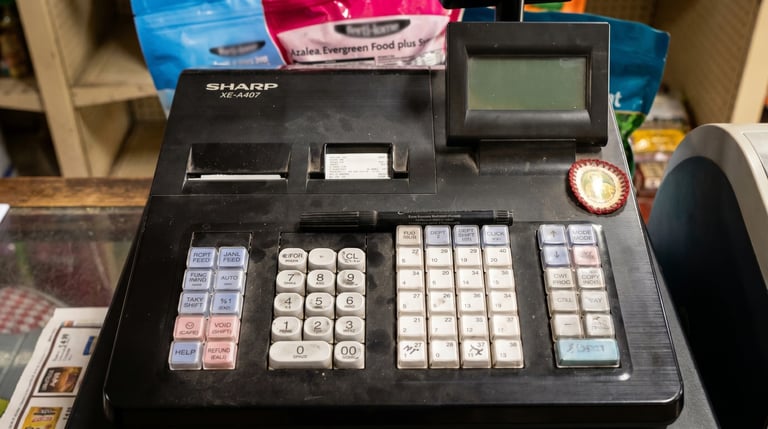
Sales tracking has relied on paper receipts and inventory has been managed visually. Ordering decisions have depended on memory and shelf observation. Historical reporting barely exists. Financial visibility has been limited by reconstructing records after the fact.
And yet this situation is far more common than most people realize.
Many small business operators do not fail because they lack work ethic or industry knowledge. They fail because operational complexity eventually outgrows the systems and processes supporting the business.
The methods that worked when the company was smaller become impossible to sustain under accumulated pressure.
When Technology is the Wrong First Move
The instinctive response is to implement software immediately: new systems, dashboards, reporting tools, and automation. That response usually fails because the business is not yet operationally ready for it.
Technology does not create operational discipline. Technology often reveals where operational discipline is absent.
When Operational Visibility is the Right First Step
The first step is almost always simpler than leadership expects: prioritize basic operational visibility.
The goal is not perfect visibility, but enough operational structure to stop running the business blindly.
In the case of the small business we are helping, the first step meant starting with the basics: tracking transactions, documenting inventory movement, organizing supplier information, rebuilding historical records, and creating consistency around daily operations. Not of it is glamorous, but all of it is necessary.
Before leaders can improve performance, they need to understand what is happening inside the business. This may sound obvious, but it often is not.
As operational visibility improves, management behavior changes. Conversations become less reactive and more analytical. Decisions become less emotional and more deliberate. Management begins to see patterns rather than isolated problems. Operational gaps that were previously invisible become impossible to ignore.
With information clarity, the business begins transitioning from reactive survival to controlled decision-making. The transition requires more than any additional report or the introduction of a new software tool.
Many businesses operate without reliable planning, structured reporting, or operational accountability. These businesses survive on experience, instinct, and constant effort from ownership. Eventually, this stops being enough and leadership faces a choice: continue operating reactively, or build the operational structure necessary to regain control.
When Confronting Operational Reality Becomes Your Competitive Advantage
The companies that survive long term are usually not the ones with the best products or the most sophisticated technology. They are the ones willing to confront and effectively address operational realities.
A story about a small business struggling to survive because operating transactionally has replaced operating strategically -- and about how AdvisureIQ can help.
Address
2035 Corte Del Nogal, Suite 125
Carlsbad, CA 92011
Contacts
© 2025 - AdvisureIQ, Inc. All Rights Reserved
Join the Clarity Cult (Kidding…kinda)